The question
Vision often sounds passive: light enters the eyes and the brain processes an image. But that isn’t how we actually use vision. We move our eyes, head, and body to acquire the information we need, and then use that information to guide our movements.
So what does vision actually look like when a primate is solving a difficult real-world problem?
How we did it
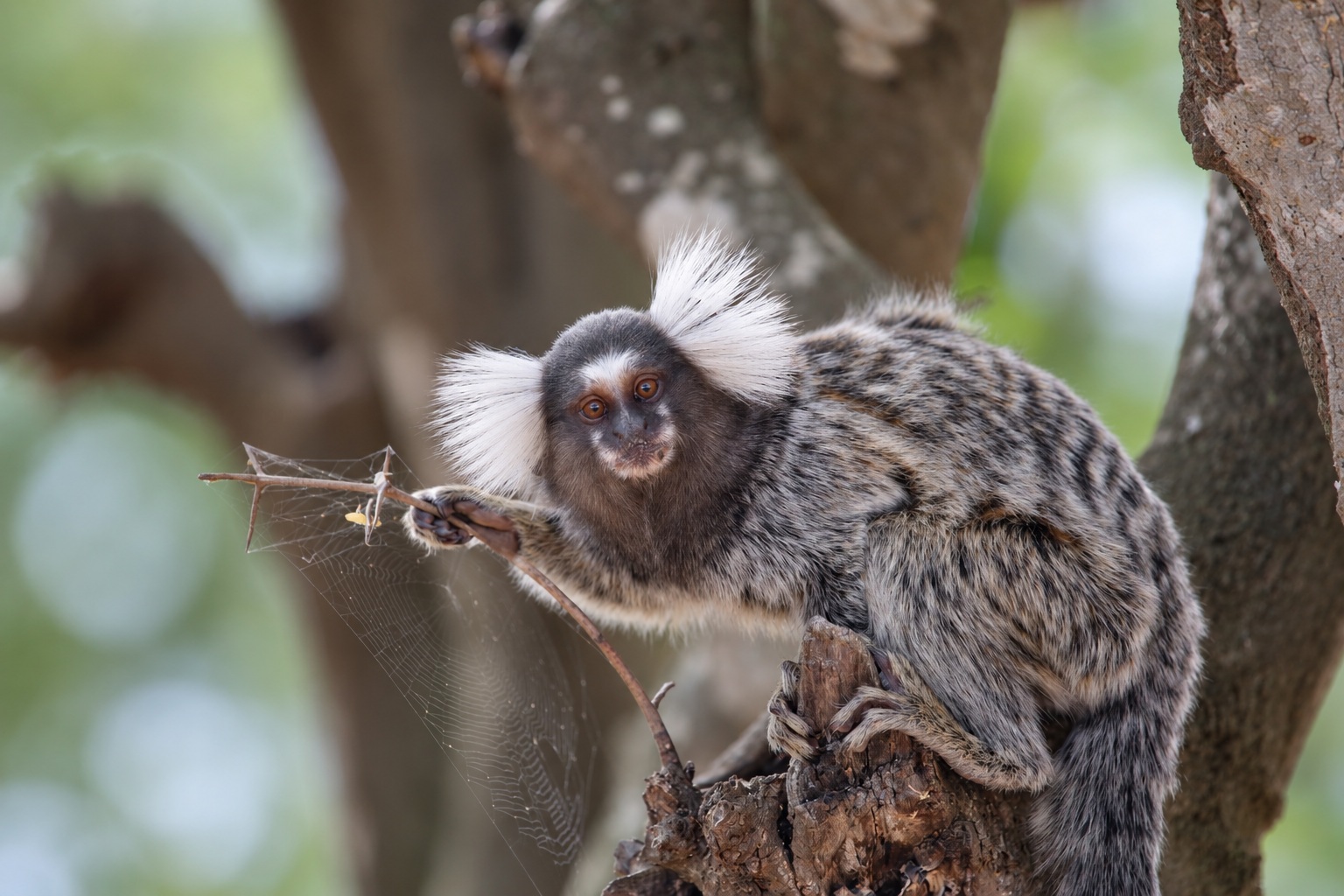
We went to northeastern Brazil and recorded wild marmosets hunting insects in their natural habitat. We analyzed 288 high-resolution videos and used AI-based markerless tracking to follow the animals, their hands, and flying insects frame-by-frame.
What we found
Marmosets didn’t simply spot an insect and execute a preprogrammed movement. They changed their body position to improve their view, closely tracked flying prey immediately before attacking, and continuously corrected the trajectory of their hands during extremely rapid reaches.
Two-handed attempts at flying prey were particularly successful, and the hand paths showed multiple real-time corrections rather than following a simple predicted trajectory.
Why it matters
Neurological disease and injury are often measured with simplified tests of vision or movement, even though everyday behavior requires the two to work together continuously. After stroke, traumatic brain injury, or disorders that impair motor control, a person may be able to see an object and move a limb yet still have difficulty using visual information to guide actions through the world.
By revealing how a primate coordinates gaze, body position, and rapid hand movements during a demanding natural behavior, this work helps define the integrated visuomotor functions that clinical tests and rehabilitation ultimately need to restore. The goal is not simply to ask whether the eyes or limbs work, but whether the brain can use vision to guide effective behavior in the real world.